
TradJS: a Bun web framework that uses the browser instead of fighting it
Contents
Repository: https://github.com/7flash/TradJS · Package: bun add tradjs (npm tradjs, version 4.6.5) · License: MIT
TradJS renders pages on the server and lets the browser do what it already does well: real links, real form posts, real back and forward buttons. Most pages run no JavaScript at all. A page that needs interaction gets a small script next to it that mounts exactly where it is needed.
What you get#
- File-based routes.
app/page.tsxis/andapp/notes/page.tsxis/notes.app/api/notes/route.tsanswersGET/POSTat/api/notes, and[id]folders take parameters. - Layouts and middleware. A
layout.tsxwraps every page below it.middleware.tsruns before them and passes typed values (locals, such as the signed-in user) to pages. - Browser scripts only where needed. Put
page.client.tsxnext to a page and its default export mounts in the browser. It can return a cleanup function, which runs when the browser puts the page into its back/forward cache. - Smooth navigation without a client router. Cross-document view transitions make ordinary page loads feel instant.
- Security by default:
- forms and fetches from other sites are refused (CSRF);
javascript:links,srcdocand unsafe style URLs are dropped on the server and in the browser;- error details are hidden in production.
- Static pages with
export const ssg = true, including routes with parameters. - A starter app (
tradjs init --template app): accounts and sessions, notes with edit/delete, pages of 20, live updates across tabs, a JSON API and accessible forms. It is in review for the next release.
// app/page.tsx
export default function Home() {
  return <main><h1>Hello</h1><div id="counter" /></main>;
}

// app/page.client.tsx
import { render } from "tradjs/client";
export default function mount() {
  let n = 0;
  const root = document.getElementById("counter")!;
  const draw = () => render(<button onClick={() => { n++; draw(); }}>Clicked {n}</button>, root);
  draw();
}
Proof it works#
Unit tests (1,673 of them) were not enough, so the starter app is also checked in a real browser:
- a script scaffolds it, installs it from npm and starts the server;
- it then drives headless Chrome through 30 user steps, including a second tab, a second user, hostile input, forged cross-site posts and keyboard-only use;
- each step saves a screenshot.
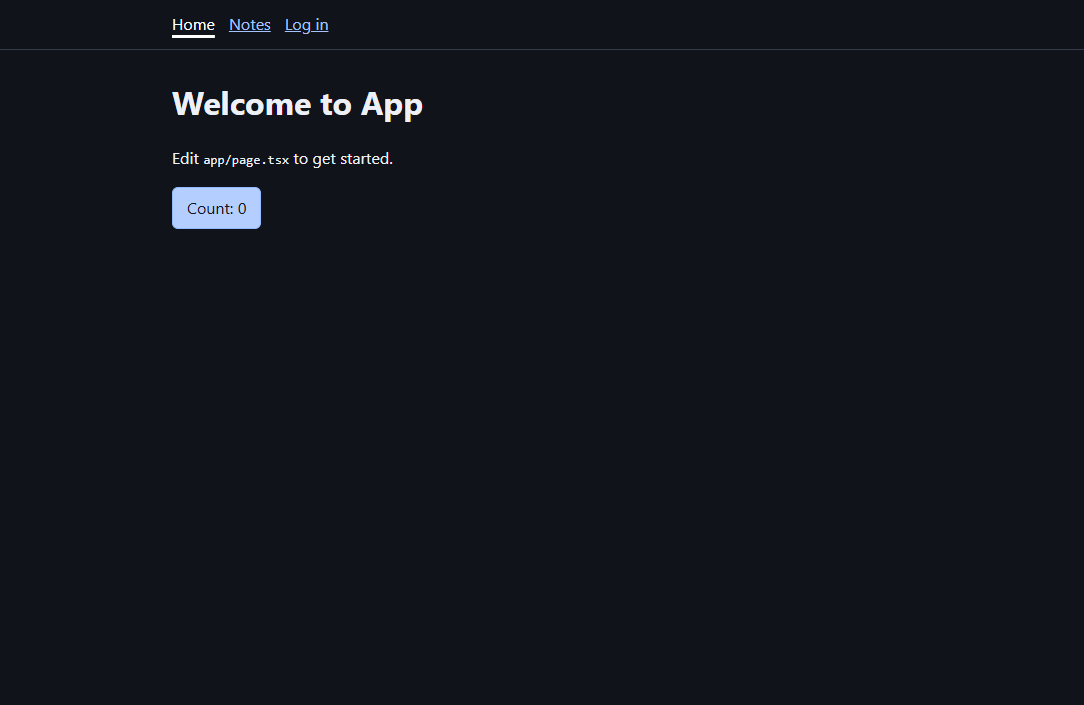
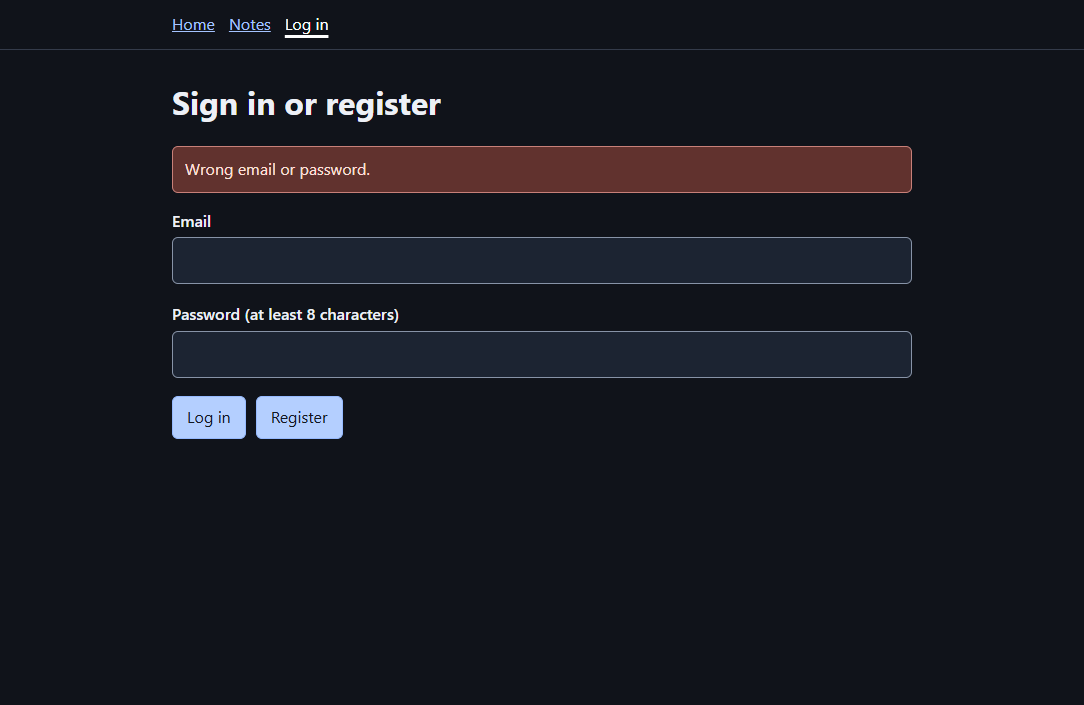
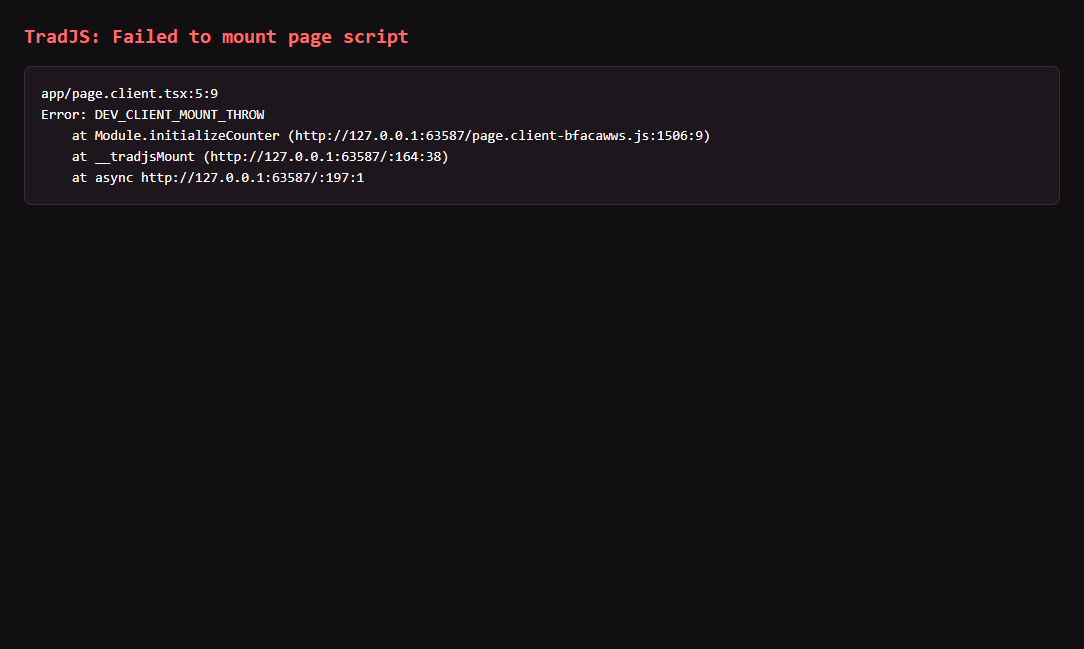
That browser check found bugs the unit tests had missed:
- Text responses were downloaded. A route returning plain text reached the browser as a download. Fixed in 4.6.4.
- Browser-drawn SVG icons were blank.
<use xlinkHref>drawn in the browser pointed nowhere. Fixed in 4.6.5; the server and browser now produce identical SVG. tradjs startfailed from another folder. Started outside the app's own folder, every page returned an error. Fixed for the next release.
Two more test matrices feed the same releases:
- Server vs browser: the same random pages rendered both ways must give the same document.
- Hostile requests: 599 attacks, including path traversal, forged origins, cache poisoning and header abuse.
Links#
- Source and README: https://github.com/7flash/TradJS
- Changelog: https://github.com/7flash/TradJS/blob/master/CHANGELOG.md
- Report on the real-browser checks: https://diadem.fun/coin/berlian/webstack-real-run-report
One person, many companies, one coin. Every project I build sends a share of its revenue back to buy $BERLIAN on the open market, and every buy is published with its transaction.
More from Gor Berlian
CNC foam-panel router: assembly in 42 pictures
42 steps, each with a picture of the whole machine and a close-up of the parts added. English and Indonesian.
1,008,000 gravity
TradJS 4.7.0 in testing: 1,902 tests and 118 browser steps on the development branch
Repository: https://github.com/7flash/TradJS · On npm today: tradjs 4.6.5 · Tested here: the 4.7.0 development branch, 19 November 2026, Bun 1.4.3 on Windows 11.
The Plain Web Stack
TradJS, sqlite-zod-orm and measure-fn: what they are, how they are tested, and when to use them. A short book, November 2026.